 ultimate-guide
Drought-Tolerant Landscaping: A 2026 Guide
Table of Contents
- Why Drought-Tolerant Landscaping Matters in Your Region
- Benefits of Switching to Drought-Tolerant Landscaping
- Native Plants for the Central Valley: Your Best Options
- Hardscaping vs. Softscaping: Building Your Water-Wise Design
- Drip Irrigation Installation Tips for Maximum Efficiency
- Troubleshooting Old Irrigation Systems in Your Landscape
- Rebates and Financial Incentives for Landscape Conversion
- Your Step-by-Step Lawn Conversion Plan
- Frequently Asked Questions
Last Updated: September 27, 2026
Why Drought-Tolerant Landscaping Matters in Your Region
The Central Valley faces a genuine water challenge. Summers regularly exceed 100 degrees, rainfall drops to near zero by June, and groundwater depletion continues year after year. Traditional turf lawns demand constant irrigation, often consuming 50% or more of residential water use. That's not sustainable, and it's not cheap either.
Absolute Lawn Care helps Sacramento Valley homeowners and property managers transition to water-wise landscapes that thrive locally, reduce maintenance, lower bills, and preserve curb appeal.
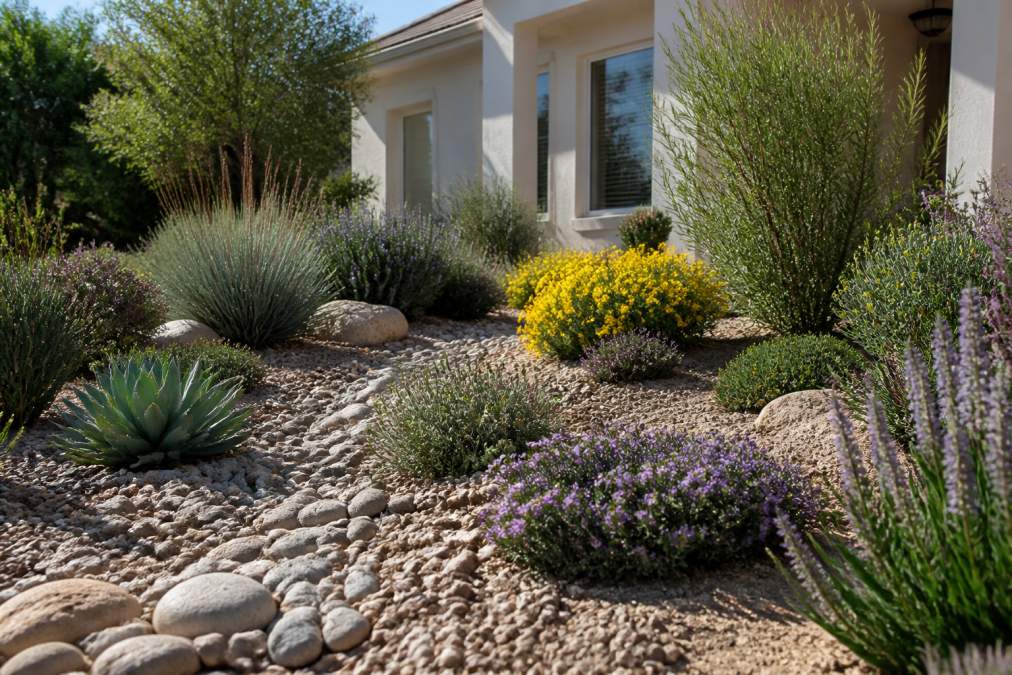
Drought tolerant landscaping means designing your yard to work with the climate, not against it. It combines native plants, efficient irrigation, smart soil amendments, and hardscaping to create landscapes that survive, and flourish, on minimal water. The Central Valley's intense heat and long dry season make this approach not optional but essential.
This guide covers the real benefits, native plants that perform here, strategic lawn replacement, and rebates to offset costs.
Benefits of Switching to Drought-Tolerant Landscaping
A properly designed drought tolerant landscaping system reduces water use, maintenance demands, improves soil health, and creates habitat for local wildlife.
Immediate cost reductions: Sacramento Valley lawns require 40-60 inches of water annually; drought-resistant landscapes use 10-20 inches or less. The financial benefits depend on current irrigation and local water rates.
Reduced maintenance burden: Native plants need less fertilizer, fewer pesticides, and less pruning. Hardscaping eliminates mowing. Many homeowners experience reduced time on yard work after conversion.
Native Plants for the Central Valley: Your Best Options
Native plants are the foundation of drought tolerant landscaping in this region, they're adapted to the Central Valley's climate and thrive without constant intervention.
Hardscaping vs. Softscaping: Building Your Water-Wise Design
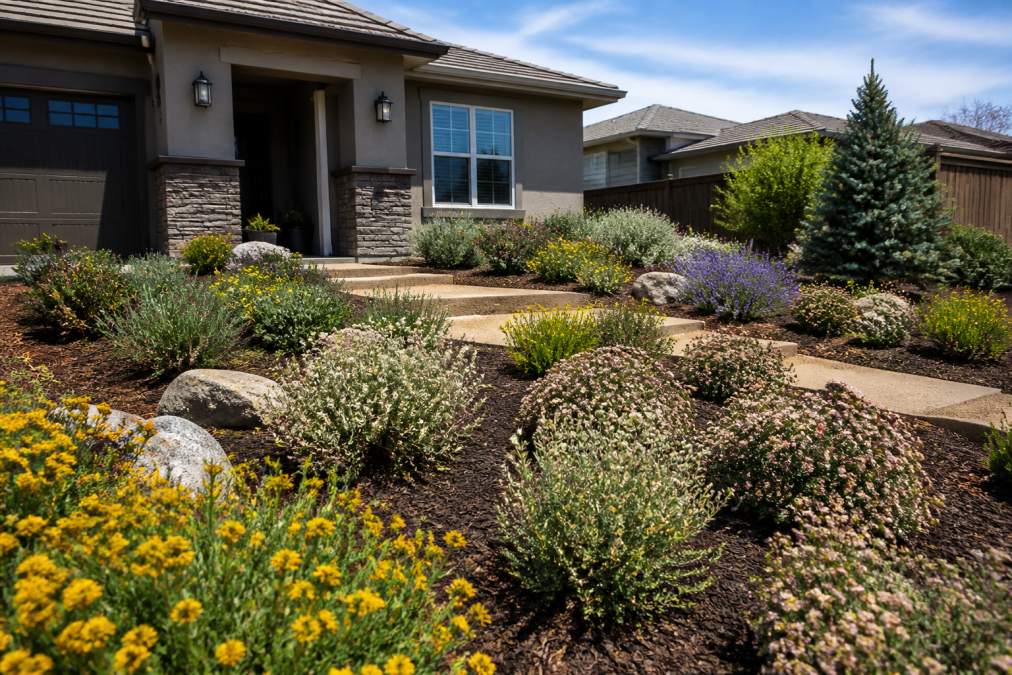
Every successful drought tolerant landscaping design balances living plants (softscaping) with non-living elements (hardscaping) to reduce water demand and create usable space.
Drip Irrigation Installation Tips for Maximum Efficiency
Drip irrigation delivers water directly to plant roots, minimizing evaporation and runoff. It's far more efficient than spray irrigation or flood watering, making it essential for drought tolerant landscaping in a hot, dry climate.
Troubleshooting Old Irrigation Systems in Your Landscape
Many Sacramento Valley properties have irrigation systems installed 10-20 years ago, designed for traditional turf and ornamentals. These systems often waste water through poor design, broken components, and outdated timer logic. Troubleshooting old systems is often cheaper than replacing them.
Common problems in aging systems:
- Broken or clogged emitters: Mineral buildup from hard water clogs drip lines. Broken spray heads deliver water to pavement instead of plants. Walk your landscape while the system runs. Look for dry patches, water pooling in odd places, or spray hitting hardscape.
- Leaking valves and fittings: Even small leaks waste thousands of gallons annually. Listen for hissing sounds or check for soggy spots that persist even days after watering.
- Misaligned sprinkler heads: Spray patterns shift over time as soil settles or heads get bumped. Adjust heads so they water plants, not sidewalks or the neighbor's property.
- Outdated timer logic: Old controllers water on a fixed schedule regardless of season or weather. Modern smart controllers adjust based on temperature and rainfall, reducing waste.
Rebates and Financial Incentives for Landscape Conversion
How to access rebates:
- Identify your water provider. Sacramento, Elk Grove, and surrounding areas are served by different agencies. Contact your local water utility or check your water bill to confirm.
- Review current programs. Most agencies post rebate details on their websites, including eligible improvements, application deadlines, and maximum rebate amounts.
- Plan your project to align with rebate requirements. Some programs require professional installation; others allow DIY. Some specify approved plant lists or contractor certifications.
- Submit pre-approval request. Many agencies require approval before work begins. Submit photos, project plans, and quotes to qualify.
- Complete the work and document it. Keep receipts, photos of the finished project, and proof of plant purchase or installation.
- Submit for reimbursement. File your claim with the required documentation. Processing typically takes 30-60 days.
State and federal programs may also apply. California's water agencies sometimes coordinate with state conservation initiatives. Check with California's Department of Water Resources for current incentives to learn about statewide programs.
Your Step-by-Step Lawn Conversion Plan
Converting turf to drought tolerant landscaping doesn't require ripping out your entire yard at once. A phased approach lets you spread costs, learn what works, and adjust as you go.
Phase 1: Assessment and planning (Weeks 1-2)
- Walk your property and note sun exposure, shade patterns, soil conditions, and existing drainage issues. Different areas have different microclimates.
- Photograph your current landscape from multiple angles.
- Sketch a basic layout showing areas you want to convert first. Prioritize high-visibility areas (front yard) or high-water-use areas (turf patches in full sun).
- Research local native plants and drought-resistant species suited to your specific microclimate.
Phase 2: Soil preparation (Weeks 3-4)
- Remove turf from the target area using a sod cutter or by hand for small areas.
- Test soil pH and nutrient levels if possible.
- Amend soil with 2-3 inches of compost or aged mulch to improve water retention and soil structure. Work it in to 6-8 inches depth.
- Grade the area to ensure proper drainage. Slight slopes prevent water pooling.
Phase 3: Hardscaping installation (Weeks 5-7)
- Install pathways, patios, or permeable pavers as planned. This is easier before plants go in the ground.
- Lay drip irrigation lines and bury them under mulch if using subsurface drip.
- Install any edging, borders, or retaining walls.
Phase 4: Planting (Weeks 8-10)
- Plant in early fall (September-October) or early spring (March-April) when soil moisture is adequate and temperatures are moderate.
- Space plants according to their mature size, not their current size. Resist the urge to overcrowd.
- Water new plantings thoroughly after planting, then maintain consistent moisture for the first 6-12 months as roots establish.
- Apply 2-3 inches of mulch around plants, keeping it a few inches away from stems.
Phase 5: Establishment and adjustment (Months 4-12)
- Monitor soil moisture. Water deeply but less frequently to encourage deep root development.
- Remove any weeds competing with new plants.
- Adjust drip irrigation timing as plants grow and seasons change.
- By month 12, most established native plants should require minimal supplemental water.
Phase 6: Expansion (Year 2+)
- Once the first phase succeeds, expand to other areas of your property using the same process.
- Capture lessons learned from the first phase and apply them to new areas.
Frequently Asked Questions
What are the best drought-resistant plants for the Sacramento Valley climate?
Native plants thrive in local conditions because they've adapted to the region's hot, dry summers and cool winters. Top choices include California buckwheat, desert marigold, native sage species, and dwarf conifers like Sierra juniper. These plants require minimal water once established, reduce your water bill significantly, and support local wildlife. Pair them with ground covers and native perennials to create a complete water-wise landscape that handles triple-digit heat without supplemental irrigation.
How much can I save on my water bill with drought-tolerant landscaping?
Water savings depend on how much of your yard you convert and your current irrigation practices. Many homeowners reduce outdoor water use by replacing thirsty turf with native plants and installing drip irrigation systems that deliver water directly to plant roots. The actual savings on your water bill varies based on local water rates and your property size, but conversions can lead to significant savings through reduced water costs.
Are there local rebates for converting to water-wise landscaping?
Yes. Water agencies throughout the Sacramento Valley offer rebates for turf replacement and irrigation upgrades. Some programs provide $1-2 per square foot for removing non-native turf, while others rebate the cost of drip irrigation system installation. Eligibility and rebate amounts vary by water provider. Contact your local water utility or visit their website to learn about current programs, application deadlines, and whether your property qualifies. Many rebates require pre-approval before work begins.
What's the difference between xeriscaping and regular drought-tolerant landscaping?
Xeriscaping is a specific design philosophy that uses seven principles: soil amendment, appropriate plant selection, practical turf areas, efficient irrigation, mulching, appropriate maintenance, and landscape design. Drought-tolerant landscaping is broader, it simply means choosing plants and systems that need less water. All xeriscape designs are drought-tolerant, but not all drought-tolerant yards follow the full xeriscape framework. Both approaches significantly reduce water consumption and maintenance compared to traditional turf-based landscapes.
Can you fix my old irrigation system, or do I need to replace it completely?
Many older systems can be repaired or upgraded rather than replaced entirely. Common issues like broken sprinkler heads, leaking lines, and outdated controllers are fixable. However, if your system uses inefficient spray irrigation for areas better suited to drip lines, a partial retrofit may make sense. A professional assessment of your specific setup, including soil type, microclimates, and plant needs, determines whether repair, upgrade, or replacement is most cost-effective. Some components may be salvageable while others benefit from replacement.
How do I know if my landscape design fits my specific microclimate?
Microclimates vary significantly across the Sacramento Valley based on sun exposure, wind patterns, soil type, and proximity to water features. South-facing slopes dry faster than north-facing areas. Low-lying spots may retain more moisture. Observe your yard throughout the year: note where water pools, where it dries quickest, which areas get afternoon shade, and how wind affects different zones. Choose plants suited to each microclimate rather than forcing one plant type across your entire yard. This targeted approach ensures better establishment and lower maintenance.