 how-to
Troubleshooting Old Irrigation Systems: Sacramento Guide
Table of Contents
- Common Signs Your Old Irrigation System Is Failing
- DIY Troubleshooting Checklist for Aging Sprinkler Systems
- What You'll Need
- Step 1: Run Each Zone Separately [Time: 10 minutes]
- Step 2: Check for Clogs and Damage [Time: 15 minutes]
- Step 3: Test Water Pressure [Time: 10 minutes]
- Step 4: Inspect the Valve Manifold [Time: 15 minutes]
- Step 5: Check the Controller [Time: 10 minutes]
- Troubleshooting Low Water Pressure in Sprinklers
- Sprinkler System Repair Cost: What Sacramento Homeowners Should Expect
- Sacramento Soil and Climate Challenges for Older Systems
- Irrigation System Maintenance Checklist for Long-Term Reliability
- When to Repair vs. Replace an Old Irrigation System
- Frequently Asked Questions
Last Updated: September 20, 2026
Common Signs Your Old Irrigation System Is Failing
Troubleshooting old irrigation systems in Sacramento starts with spotting the warning signs early. At Absolute Lawn Care, we see the same failures repeat across aging yards in Elk Grove and the Sacramento Valley. Catching them early saves water and money.
Here's what failing systems do before they quit completely:
- Dry patches that stay brown even after watering
- Sprinkler heads that spray sideways or barely pop up
- Puddles forming in one spot while other zones stay dry
- A water bill that keeps climbing with no change in use
- Valves that hum but never actually open
Symptoms You Should Never Ignore
Some problems look minor but point to bigger trouble underground. A single soggy patch often means a cracked lateral line. One weak zone usually signals a failing valve or clogged nozzle.
DIY Troubleshooting Checklist for Aging Sprinkler Systems
Most homeowners can diagnose simple problems in under an hour. Work through this checklist before calling anyone.
Total Time: 45 to 60 minutes Difficulty: Beginner
What You'll Need
- Flathead and Phillips screwdrivers
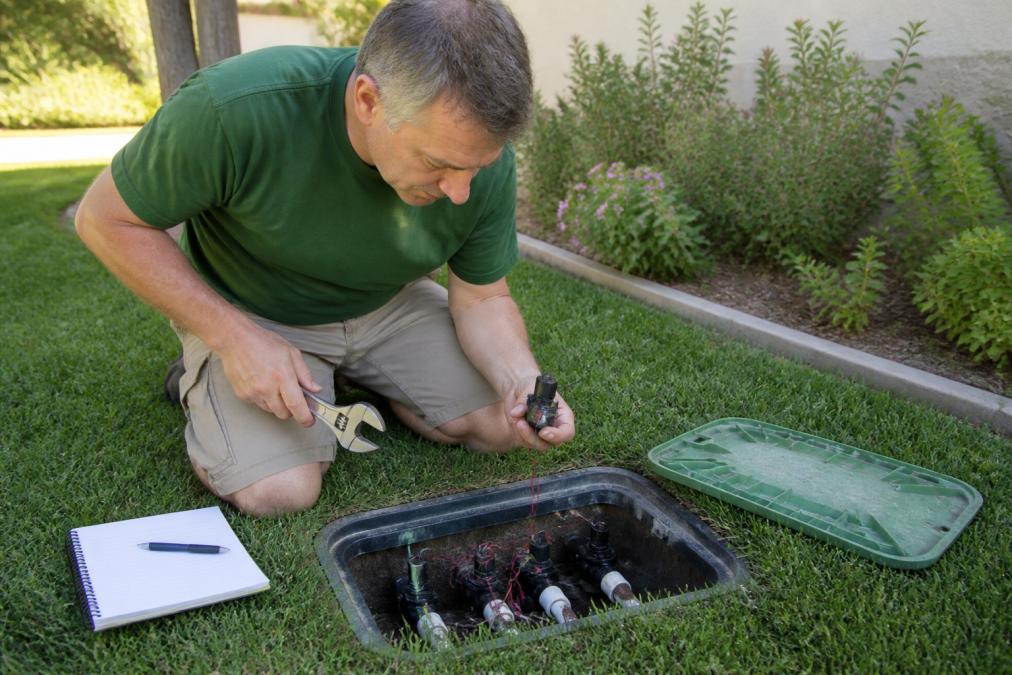
- Adjustable wrench
- Replacement nozzles and sprinkler heads
- A notepad for zone notes
Step 1: Run Each Zone Separately [Time: 10 minutes]
Turn on one zone at a time from the controller. Watch every head. Write down which ones fail.
Expected Result: A clear list of problem zones and heads.
Step 2: Check for Clogs and Damage [Time: 15 minutes]
Unscrew each nozzle and check for grit, grass, or mineral buildup. Soak clogged nozzles in white vinegar overnight.
Step 3: Test Water Pressure [Time: 10 minutes]
Attach a pressure gauge to an outdoor spigot. Most residential systems run best between 30 and 50 PSI. Low readings point to supply problems, not the sprinklers.
Step 4: Inspect the Valve Manifold [Time: 15 minutes]
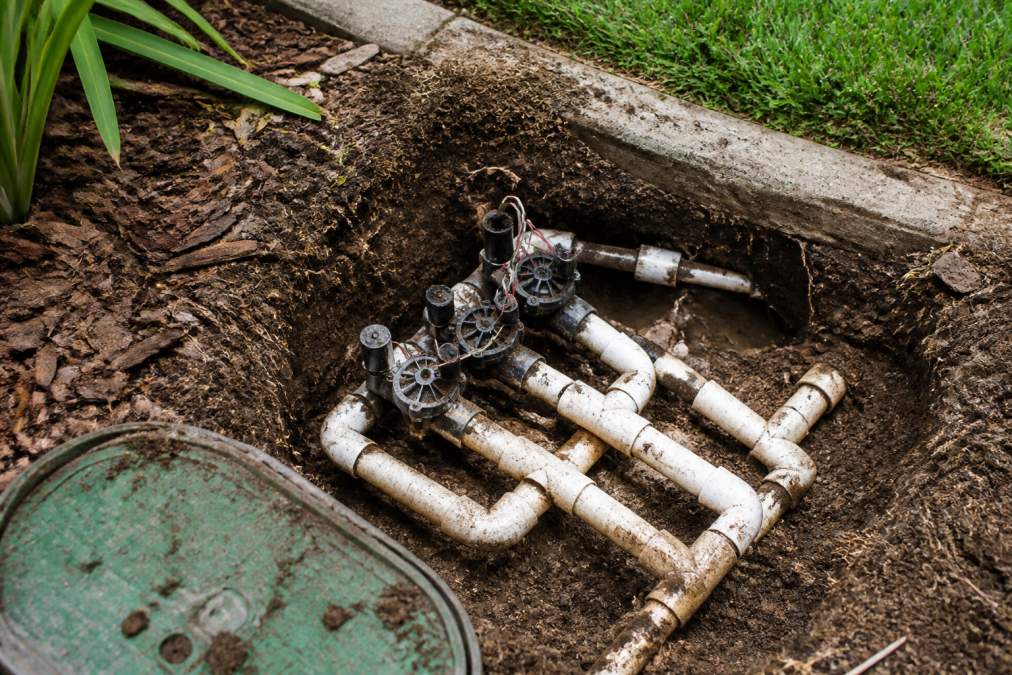
Open the valve box and look for cracked diaphragms, loose wiring, or a solenoid that won't click. A solenoid is the small cylinder that opens the valve when the controller signals it.
Step 5: Check the Controller [Time: 10 minutes]
Confirm timer settings, zone run times, and seasonal adjustment. A controller with a dead backup battery loses its programming after a power blip.
Expected Result: You'll know whether the issue is a head, a valve, wiring, or the controller itself.
Troubleshooting Low Water Pressure in Sprinklers
Low water pressure in sprinklers usually comes from one of three sources: a clog, a leak, or a supply problem. The fix depends on where the pressure drops.
Pressure Problems Caused by Clogs and Leaks
Clogged nozzles and drip emitters starve downstream heads. A hidden pipe leak bleeds pressure before water ever reaches the zone.
Walk the line and look for:
- Soft, spongy spots in the lawn
- Constant wet patches near the valve box
- Drip emitters that stopped dripping entirely
- A pressure reading that drops when a second zone kicks on
Sprinkler System Repair Cost: What Sacramento Homeowners Should Expect
| Repair Type | Typical Parts Cost | Typical Installed Cost | What Drives the Number |
|---|---|---|---|
| Sprinkler head replacement | $3 to $15 per head | $75 to $150 per head installed | Head type (pop-up vs. rotor), riser condition, how many heads in the zone |
| Nozzle replacement | $1 to $5 per nozzle | Often included in a service call | Whether the tech is already on site |
| Solenoid replacement | $15 to $40 | $100 to $200 | Valve box accessibility, wire condition |
| Valve rebuild (diaphragm and seals) | $10 to $25 | $125 to $250 | Whether the body is salvageable |
| Full valve replacement | $25 to $60 | $150 to $300 | Manifold layout, number of valves sharing the box |
| Lateral line leak repair | $5 to $20 in fittings | $150 to $400 | Depth of the line, soil type, how much lawn gets cut open |
| Mainline leak repair | $20 to $60 in fittings | $300 to $800+ | Line size, depth, proximity to hardscape |
| Controller replacement | $80 to $250 | $200 to $500 installed | Zone count, smart features, whether wiring needs rework |
| Backflow preventer repair | $30 to $120 | $150 to $350 | Whether it is a repair or a full replacement |
| Full system audit | N/A | $75 to $200 | System size and zone count |
What actually moves the price up or down:
- Access. A valve box under a foot of mulch or buried by roots adds labor. A manifold in an open bed is quick work.
- Depth. Lateral lines usually sit 6 to 12 inches down. Mainlines can sit 18 inches or deeper, and deeper means more digging.
- Zone count. Controller and audit pricing scales with the number of zones, not the size of the yard.
- Parts availability. Older systems sometimes use discontinued heads or valves. If a direct match is gone, the tech may need to retrofit a whole zone so the heads match.
- Emergency vs. scheduled. After-hours and weekend calls typically carry a premium over a scheduled weekday visit.
How to avoid getting overcharged:
- Ask for a written quote before work begins, broken out by parts and labor.
- Ask whether the price is per head or per zone. Per-zone pricing protects you when a zone has six heads.
- Ask what happens if the tech finds a second problem mid-job. A good policy is a re-quote before any additional work.
- Get the warranty in writing. Parts warranties and labor warranties are usually separate.
A written quote before work starts is the single best protection against surprise costs. Ask for one every time.
Sacramento Soil and Climate Challenges for Older Systems
Generic irrigation advice does not account for what is actually under the lawn here. Two local conditions do most of the damage to aging systems: heavy clay soil and a long, hot dry season.
Clay Soil and Why It Breaks Old Systems
The soil across much of the valley is clay-heavy. Clay particles are tiny and tightly packed, so water moves through them slowly. A mature lawn on clay might absorb a quarter inch of water per hour, while a fixed-spray zone can put down half an inch in fifteen minutes. The excess does not soak in. It pools, runs off into the gutter, and carries your water bill with it.
- It swells when wet and shrinks when dry. That cycle flexes buried pipe season after season. Rigid PVC laterals and older poly lines crack at fittings and joints first, because those are the stress points.
- It holds water against valve boxes. A valve box sitting in clay stays wet long after the rest of the yard dries. That accelerates corrosion on solenoids and wiring splices.
What to do about it:
- Switch fixed-spray zones to cycle-and-soak scheduling. Run a zone for 5 minutes, let it soak 15, run it again. Most controllers built in the last decade have this as a built-in program.
- Aerate once a year. Core aeration opens channels for water to move past the clay layer.
- Top-dress with compost. It is slow, but it improves infiltration over a few seasons.
- When a lateral does crack, ask the tech to sleeve or splice with flexible couplings rather than a rigid patch. Flexible joints tolerate the swell-shrink cycle better.
Hard Water and Mineral Scale
Water here runs hard, meaning it carries dissolved calcium and magnesium. Those minerals precipitate out as scale inside nozzles, drip emitters, and valve diaphragms. A nozzle that flowed fine two seasons ago may be down to half its rated output today, and the symptom looks exactly like low pressure.
Summer Heat and Component Fatigue
A long stretch of triple-digit days stresses every part of the system. Rubber diaphragms stiffen. Plastic heads get brittle. Sun-exposed risers and swing pipe crack. Controllers mounted on a south- or west-facing wall can overheat and drop their programming.
Winter Freezes
Freezes are short here but they are not rare, and they are hard on exposed pipe, backflow assemblies, and above-ground valves. A single hard freeze can crack a backflow preventer that survived a decade of summers. Winterize before the first freeze, and insulate or drain any exposed assembly.
Water Pressure: The Local Wildcard
Pressure varies block to block depending on elevation and how close you are to a booster station. A system that ran fine at one address can run weak two streets over. That is why the pressure test in the checklist above matters more here than in most markets. If your static pressure at the spigot reads below about 40 PSI, no amount of head swapping will fix drooping sprinklers.
Irrigation System Maintenance Checklist for Long-Term Reliability
A simple maintenance routine adds years to any system. Run through this list each season.
- Test every zone and note weak heads
- Clean or replace clogged nozzles
- Check valve manifold for leaks and loose wiring
- Inspect the backflow preventer before winter
- Adjust timer settings for the season
- Walk the yard for soggy or dry patches
- Flush drip lines and clean emitters
- Winterize before the first hard freeze
When to Repair vs. Replace an Old Irrigation System
Repair makes sense when the problem is isolated. Replace when failures keep stacking up across multiple zones.
Use this rule of thumb:
- Repair if one or two heads, a single valve, or one line is failing
- Replace if the controller is obsolete, pipes leak in several places, or repairs cost more than a new system
- Audit first if you're unsure, since a full inspection shows the real condition
Frequently Asked Questions
How can I troubleshoot my irrigation control system?
Start by checking the controller for error codes or a blank display. Test each zone manually using the controller's manual run feature. If a zone does not activate, inspect the solenoid and wiring for corrosion or loose connections. For old irrigation systems, wiring faults are common because underground connections degrade over time. A multimeter can confirm whether the solenoid is receiving power. If the controller works but valves do not open, the issue is likely at the valve or solenoid rather than the timer itself.
How do I know if an irrigation solenoid is bad?
A bad solenoid typically shows three signs: the zone will not turn on, the valve stays open continuously, or you hear a buzzing sound from the valve box. Test it by disconnecting the solenoid from the controller and checking resistance with a multimeter. Most solenoids should read between 20 and 60 ohms. A reading outside that range or no reading at all means the solenoid has failed. Replacing a solenoid is far cheaper than replacing the entire valve, so test before you swap parts.
What are common problems with old irrigation systems?
Older irrigation systems commonly develop clogged nozzles from mineral buildup, cracked lateral lines from root intrusion, failing solenoids, and worn valve diaphragms. Controllers may lose programming or stop responding. Low water pressure often results from multiple leaks or a failing backflow preventer. In the Sacramento Valley, hard water accelerates mineral deposits inside drip emitters and sprinkler heads. Many of these issues are repairable, but when three or more components fail at once, replacement usually costs less over time.
When should I replace an old irrigation system instead of repairing it?
Replace rather than repair when pipes are brittle and cracking in multiple zones, or when the controller cannot be programmed for current water-efficient schedules. Systems installed before 2000 often lack pressure regulation and check valves, which wastes water. If you are facing repeated repairs every season, a new system with updated sprinkler heads and drip zones will save money on water bills and reduce maintenance calls. Get a written quote before deciding.
Aging irrigation systems waste water and money, and the problems rarely fix themselves. Absolute Lawn Care handles complex irrigation repairs, sprinkler head replacement, valve diagnostics, and seasonal winterization for homes and businesses across Elk Grove and the Sacramento Valley. Our licensed and insured team provides written quotes before work starts and manages all your exterior needs in one place. Get a free quote today and keep your system running through every season.